Showing posts with label online classes. Show all posts

Sunday, April 15, 2012

Online Usage in the Modern Language Classroom

Wordle - lindiop's bookmarks
Wordle courtesy of LindaH from Flickr

I am very excited about some online resources that I have discovered for use in my Spanish classroom.  YouTube videos and Skype make it possible for students to listen to native speakers when there are none available in the classroom.  There are millions of articles, newspapers, and blogs written in Spanish that students can use to strengthen their reading skills.  There are online games and activities that can be used to expand on their reading, writing, listening, and speaking skills.  Online technology has opened many doors to learning in the Modern Language classroom.

I recently read the article Constructing a Roadmap to More Systematic and Successful Online Reading and Vocabulary Acquisition by John Paul Loucky.  He stresses the importance of vocabulary learning in Modern Language study and the use of online resources to reinforce this learning.  He also gives countless examples of websites that are instrumental in strengthening vocabulary retention.  He gives examples for all levels of learners, from Beginning through Advanced.  A few examples that I found to be helpful from the article are:
Word Champ, leTutor, ESL Gold, and CALL 4 ALL

This YouTube video shows how to use GoogleEarth video games in the classroom.  I think this would be a very fun activity for students to do!
All you need to do is search Spanish (or German, French, Arabic, etc.) in Google and you will find countless lesson plans, activities, games, authentic material, etc.  that can be used to reinforce the units that you are teaching.  Online technology has allowed for millions of resources and ideas for the Modern Language Teacher, things that weren't available to us before.

Wednesday, March 7, 2012

'Cuz the Schools, They are A-Changing....

Photo Courtesy of Pics4Learning

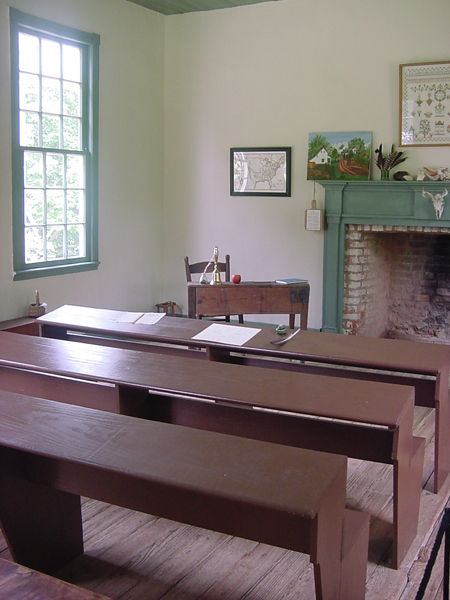
There has been much recent discussion of closing Malcolm Price Laboratory School in Cedar Falls, Iowa, which facilitates, among other things, the Level II field experiences for education majors at the University of Northern Iowa.   At this time there have been no concrete answers to the question of where Level II experiences will occur, but I had heard a rumor about replacing the hands-on Price Lab teacher preparation program with a "virtual classroom" scenario.  I had an amazing experience during my Level II and immediately thought the rumored "virtual classroom" could never be as instrumental in teaching teachers as the hands-on model I experienced at Price Lab.

This rumor, along with topics discussed in my Educational Technology and Design class, made me think a lot about the future of classrooms in regards to our increasing use of technology.  Following are some of my questions and speculations for the future of classrooms and the implications for the students therein.

The "virtual classroom" idea may not be too far removed from reality in the near future.  The following article, Are Schools Prepared for the Digital Classroom, goes into more detail about how close we are to fully integrating technology into the classroom.  The "virtual classroom" model is coming closer to realization with the improvement and implementation of technology.  Online classes are already prevalent at universities.  It's possible to take an entire course without ever meeting the other students or the instructor face-to-face.  Some high schools also allow their students to also take such classes.  Eventually this practice will become more widespread.  Will there come a time when there is no need for face time with a teacher in an actual classroom?  Is it possible that the brick-and-mortar high school will be replaced with a computer and internet connection? It allows for flexibility for the students, and would save money and other resources for the administration.  I think that this is a plausible idea for the future of education.

Why would students want to go to school if they could learn everything on their own time and at their own pace? What will students be missing out on if they are not required to attend a traditional school everyday?  I think the most important thing that students would miss out on is time spent with peers.  This could affect their social growth, both within interpersonal realms and within global realms.  Students are exposed to people of different religions, races, ideologies, cultural backgrounds, and sexual orientations when they attend school.  Without that interaction, some children would have a limited exposure to the diversity in society.  The following YouTube video touches on the ramifications of the increased use of technology versus peer interactions.
I believe that a "virtual classroom" has its positive attributes, such as efficiency, flexibility, and potential for learning.  On the other hand, I believe that face-to-face peer interaction is very important for children's development.  Many children have limited exposure to diversity, and schools give them that opportunity.  I personally believe that access to diversity is very important, and is the main reason I chose to be a Spanish teacher.  If children are lacking in the understanding and acceptance of different cultures, religions, lifestyles, etc., they suffer socially and intellectually.  If we can find a way for children to experience these interactions while attending a "virtual classroom" I am all for it.  I just don't want to see our children's social skills suffer because of the advancement of technology.